
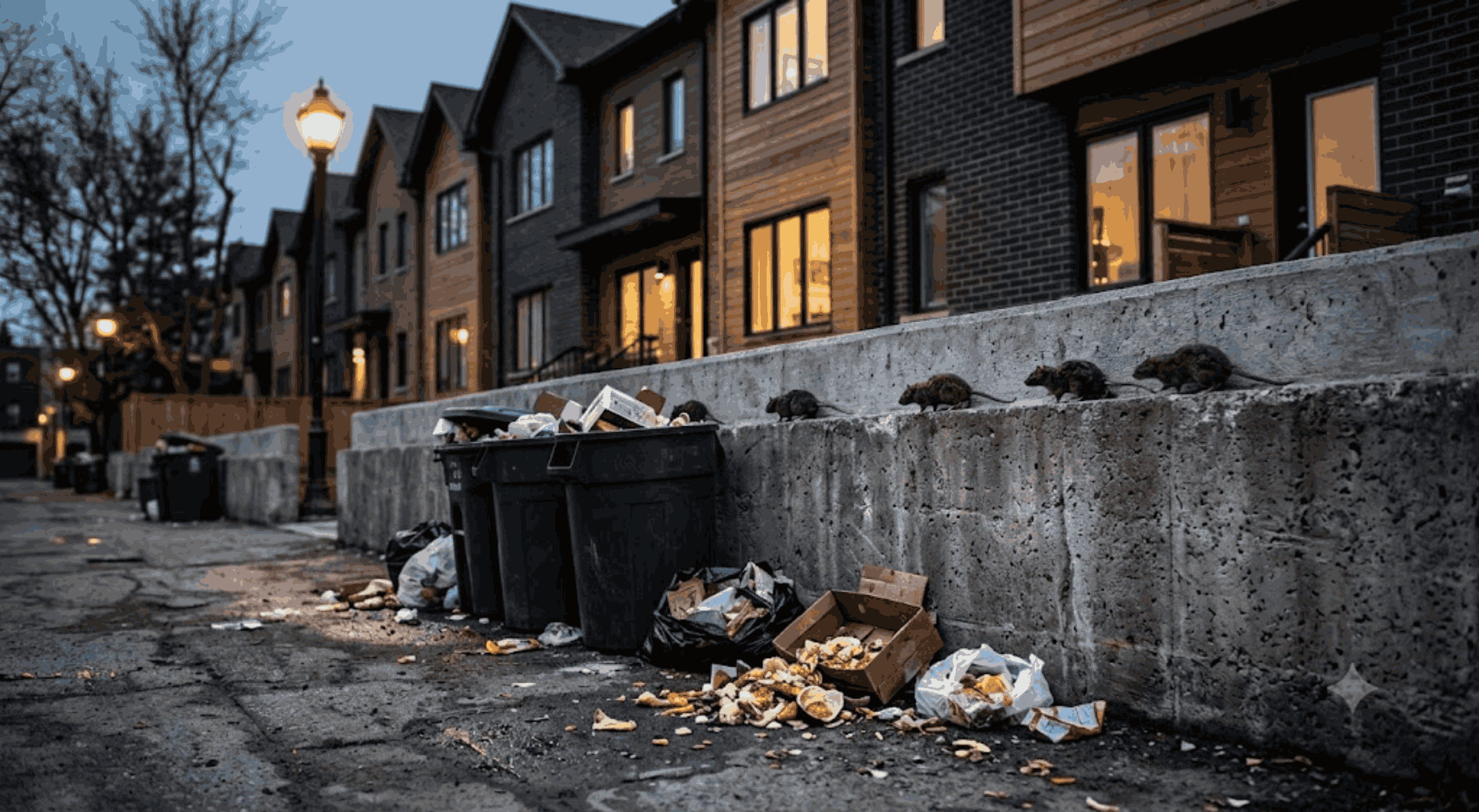
Rats are highly adaptable creatures, but they do not infest every neighborhood equally. Certain environments provide ideal conditions for rodent populations to thrive, causing specific areas to experience significantly higher rat activity than others.
The primary driver behind high rat populations is easy access to food and water. Neighborhoods with open trash cans, frequent littering, overflowing dumpster zones, or uncollected household waste create endless feeding grounds. Outdoor pet food bowls, fallen garden fruit, and bird feeders also attract rats looking for a quick, effortless meal.
Equally important is the availability of suitable shelter. Urban and suburban areas with dense vegetation, overgrown yards, woodpiles, or abandoned structures offer perfect nesting sites. Older buildings with structural gaps, unsealed utility openings, or cracked foundations give rats easy access indoors to build nests and breed away from predators.
Additionally, high-density residential areas and commercial zones, especially near restaurants, grocery stores, or construction sites, often see higher rodent activity. Construction projects disrupt underground burrows, driving displaced rats into nearby homes and businesses seeking new harborages.
Preventing rat infestations requires eliminating food sources, clearing outdoor debris, and sealing structural entry points. When DIY prevention is not enough to control a persistent rodent problem, Maxiclean Solutions offers professional pest control services to locate nesting sites, eliminate infestations, and safeguard your property long-term.
Add Comment